
Explore driver topics through clear learning paths.
Our driver library is arranged by hardware categories, helping you understand how different devices communicate with a computer system through dedicated driver layers.

Printer Drivers
Printer drivers translate documents and images from your computer into precise language for your hardware, managing margins, ink usage, and mechanical movement.

Audio Drivers
Audio drivers translate digital data into physical vibrations for speakers. They manage timing and signal purity to ensure high-fidelity sound and recording.

Scanner Drivers
Scanner drivers manage the bridge between your computer and imaging hardware, controlling mechanical sensor movement and converting light into digital files.

Audio & Video Drivers
Audio and video drivers synchronize digital signals for both sound and motion, ensuring perfect alignment between your speakers and display for clear media.

Chipset Drivers
Chipset drivers manage how the processor communicates with every piece of hardware on the motherboard, acting as a foundation for stable system coordination.

Graphics Drivers
Graphics drivers translate program instructions into millions of color changes, enabling high-definition images, smooth video playback, and realistic 3D art.

Network Drivers
Network drivers manage data packets between your computer and the world via cables or wireless signals, ensuring high speed and secure internet connectivity.
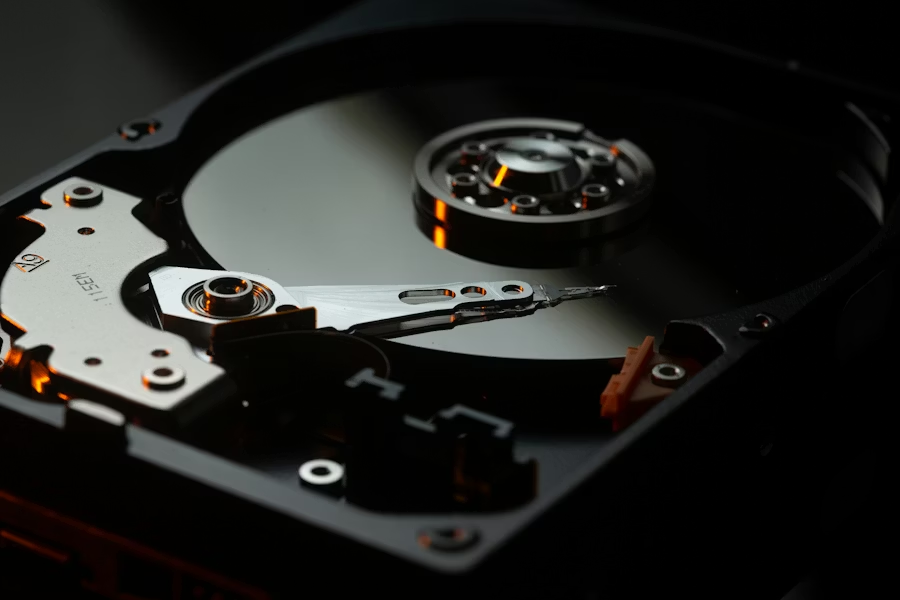
Storage Drivers
Storage drivers manage reading and writing data on your internal drives, ensuring files are saved accurately and can be retrieved quickly without corruption.

USB Drivers
USB drivers manage connections for external devices, handling data flow, power distribution, and instant recognition for seamless plug-and-play functionality.

Bluetooth Drivers
Bluetooth drivers enable wireless radio communication with nearby accessories, managing security handshakes and ensuring stable, cable-free data transmission.

BIOS Drivers
BIOS firmware provides the fundamental instructions to wake up hardware components during startup, performing health checks and loading the operating system.

Webcam Drivers
Webcam drivers translate raw light into digital video streams, managing focus, light sensitivity, and privacy controls for clear and secure video communication.

Power Drivers
Power drivers regulate system electricity usage, balancing performance with cooling and battery life to keep your hardware running efficiently and safely.

Display Drivers
Advanced display drivers enable high-end visual features like deep colors and multi-monitor support, ensuring smooth motion and professional color accuracy.

Input Drivers
Input drivers translate physical actions like key presses and mouse moves into digital commands, enabling gestures, fast responses, and custom hardware controls.

Security Drivers
Security drivers manage biometric sensors and dedicated encryption chips, protecting your identity and sensitive data through hardware-level authentication.